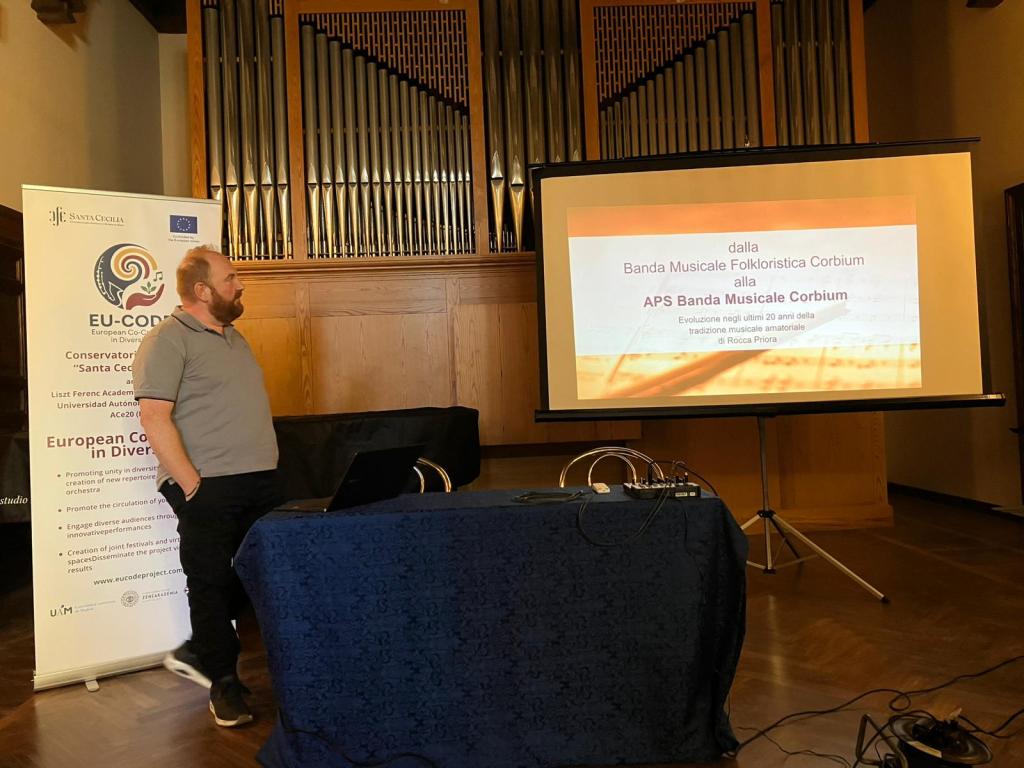
The first international workshop dedicated to the operational capacity and institutional framework of wind orchestras concluded with great success, held from October 2 to 5 at the “Santa Cecilia” State Conservatory of Music.
The initiative is part of the European project EU-CODE – European Co-Creation in Diversity, co-financed by the European Union’s Creative Europe programme and coordinated by the Santa Cecilia Conservatory. It represented a high-profile moment for cultural and musical dialogue among European institutions.
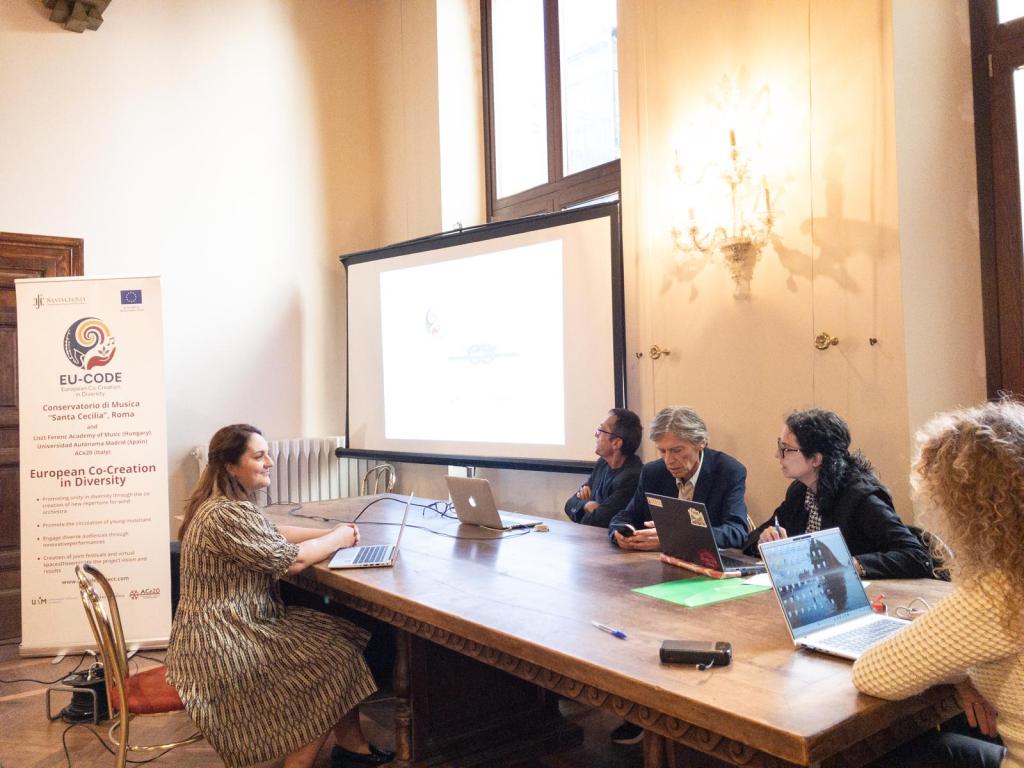
The workshop saw the participation of sector experts, musicians, academic, and institutional representatives from various countries. The main objective was to promote a shared reflection on the role of wind bands in contemporary society, enhancing their artistic, educational, and social potential.
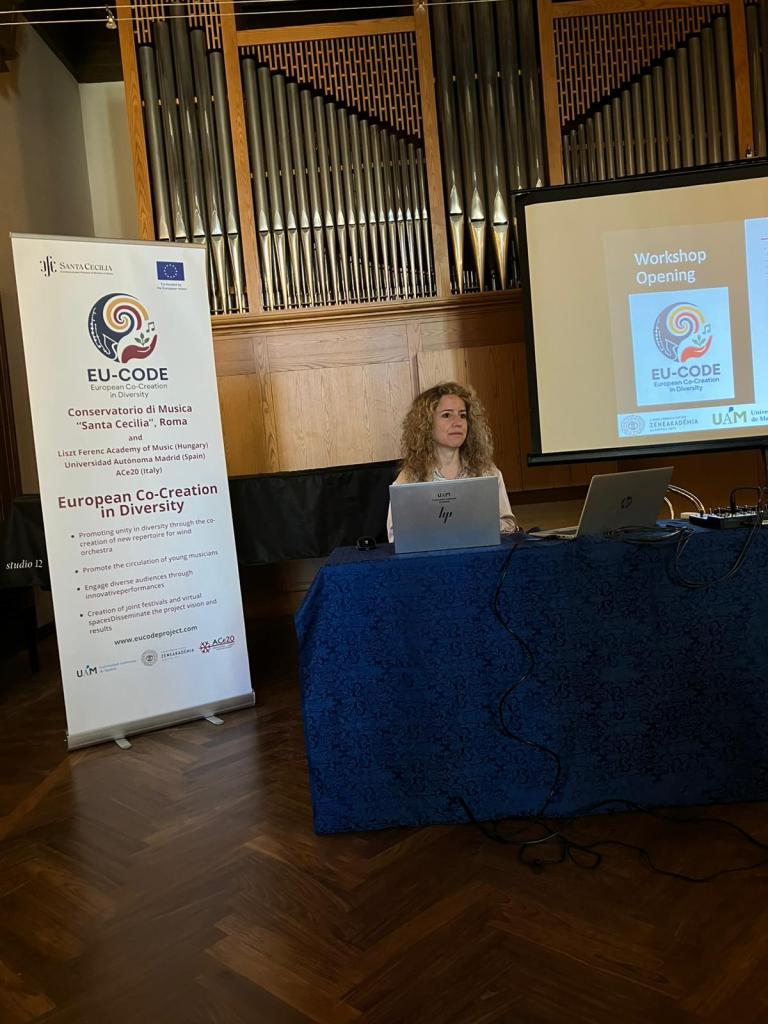
Proceedings opened on Thursday, October 2, with the welcoming of participants and institutional greetings from the project promoters. The following days were marked by in-depth thematic sessions and high-impact performance moments.
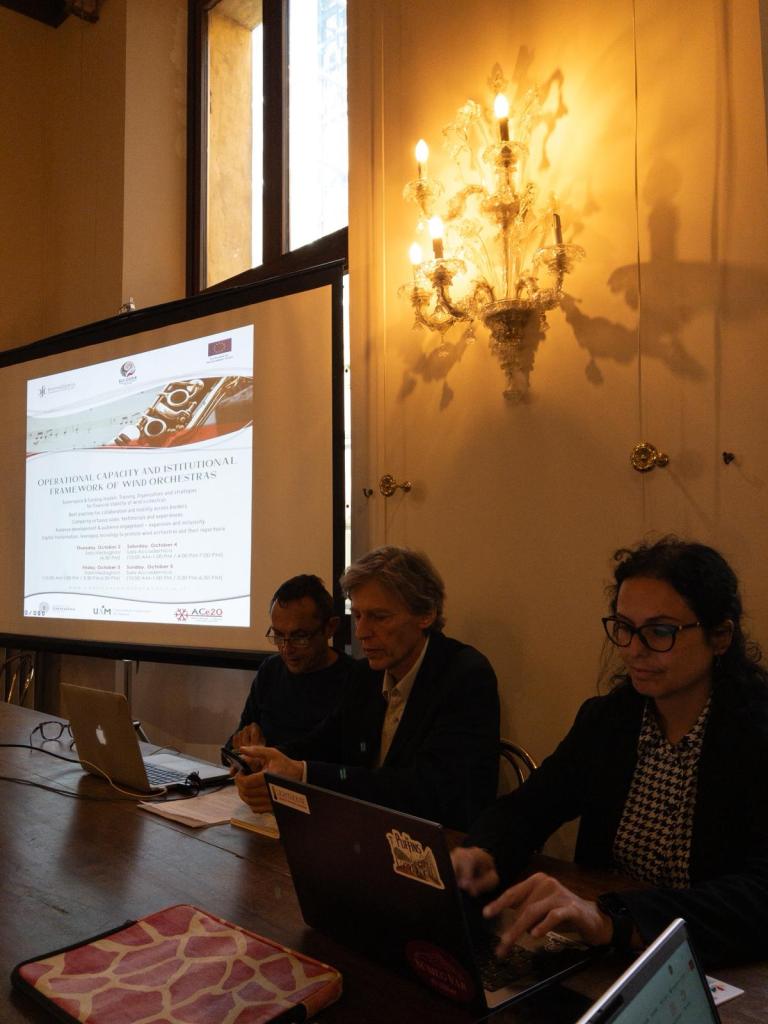
On Friday, October 3, sessions addressed strategies for the training, organization, and economic sustainability of wind bands, as well as virtuous cross-border collaboration practices. On Saturday, October 4, the focus shifted to audience development, social inclusion, and the use of digital technologies for promoting wind band repertoire.
On Sunday, October 5, the workshop reached its climax with a summary session and institutional greetings, crowning a rich and well-attended programme.
Among the key figures of the initiative, the contributions of Antonio Pelizza, a music scholar at the Santa Cecilia Conservatory, and Gianfilippo Pocorobba, professor of Instrumentation and Wind Orchestra Conducting at the same institution, and also the project coordinator, are noteworthy. Both were actively involved in designing and leading the educational and artistic sessions.
The EU-CODE project was made possible through the collaboration of important European partners:
- The “Santa Cecilia” State Conservatory of Music in Rome, the lead partner and host of the event;
- Franz Liszt Academy of Music in Budapest, which celebrates the 150th anniversary of its foundation this year;
- Universidad Autónoma de Madrid (UAM), active in promoting musical culture in Spain;
- The Italian entity ACe20 – Innovazione, Cultura, Comunicazione, engaged in cultural planning and the enhancement of artistic practices.
The initiative confirmed the value of wind bands as instruments of social cohesion, musical education, and intercultural dialogue. The institutional framework offered by the Creative Europe programme strengthened the European dimension of the project, fostering cooperation among entities and professionals in the cultural sector.



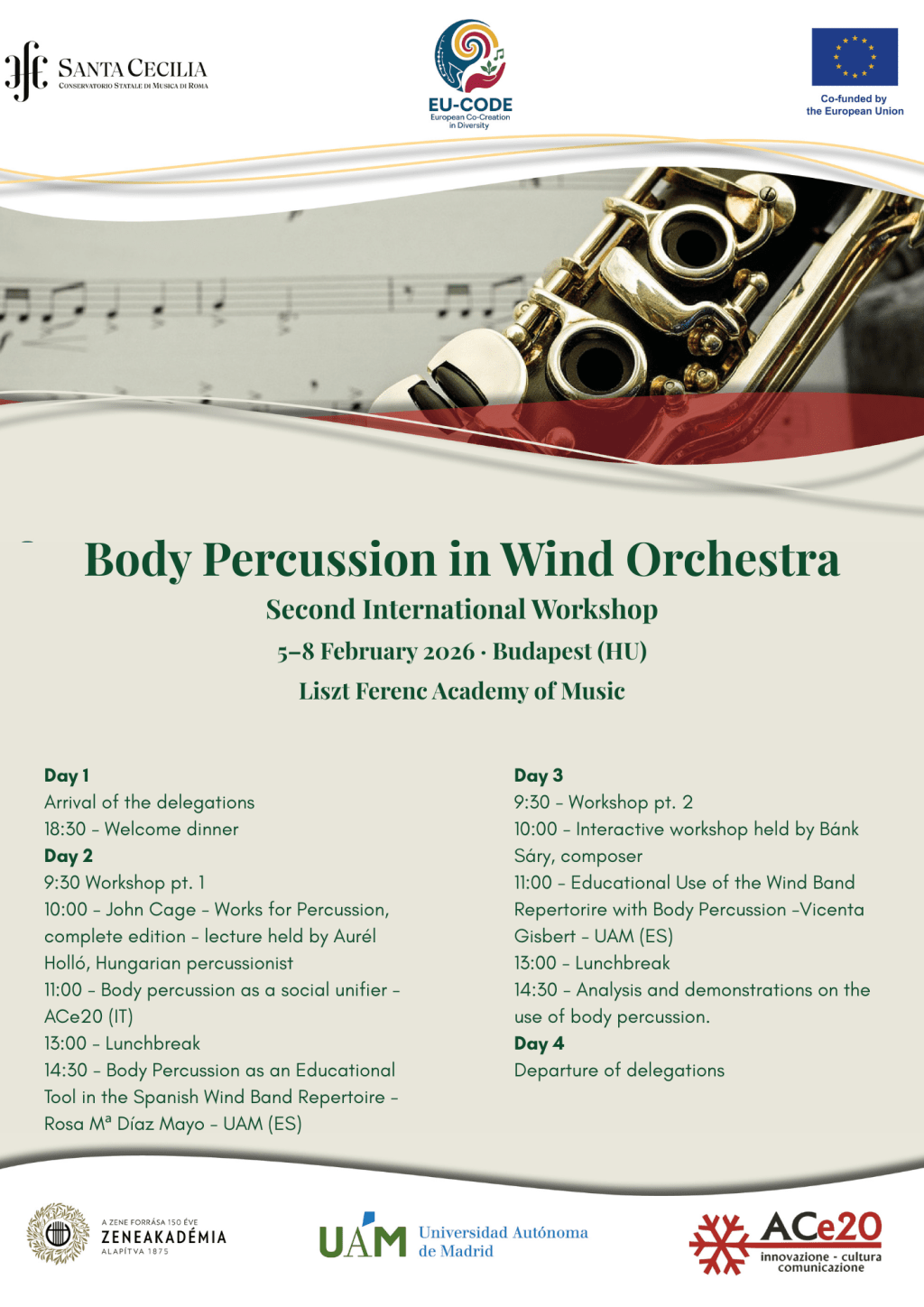

 EU-CODE
Lascia un commento