The EU-CODE Joint Training Seminar in Madrid
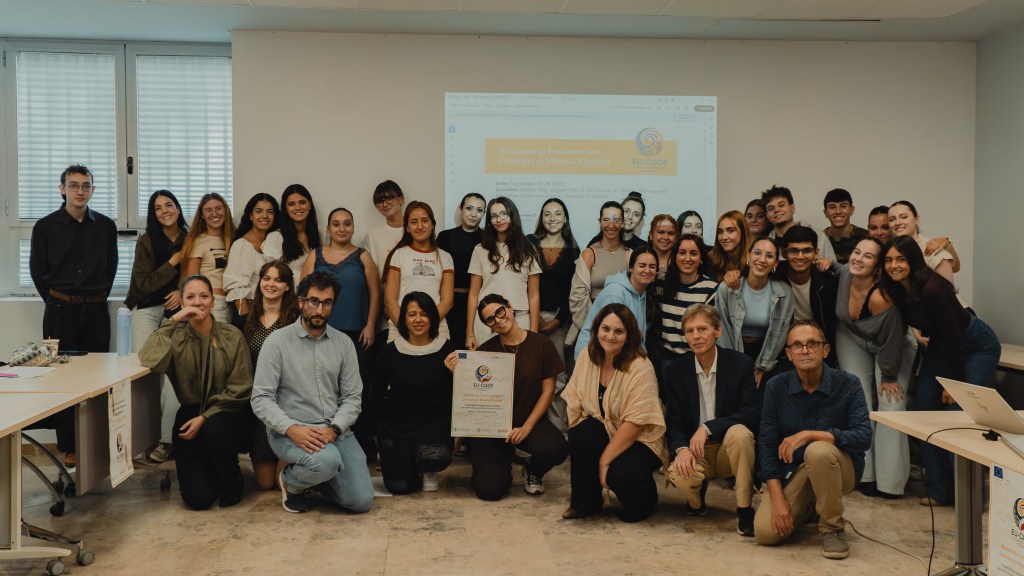
On September 29 and 30, 2026, the Degree Hall of the Faculty of Teacher Training and Education at the Autonomous University of Madrid hosted the Joint Training Seminar 2, titled Gender Mainstreaming in Wind Orchestras. The event was organized within the framework of the European project EU-CODE (European Co-Creation in Diversity), co-funded by the Creative Europe Programme of the European Union and led by the Santa Cecilia Conservatory of Music in Rome as the coordinating institution, in partnership with the Liszt Ferenc Academy of Music in Budapest, the Autonomous University of Madrid, and the organization ACe20.
The primary objective of the seminar was to promote gender mainstreaming within European wind orchestras, providing methodological and operational tools to overcome gender stereotypes and foster an equitable, inclusive working environment for all musicians. Through a rich programme of papers, case studies, and collaborative sessions, the event sought to identify effective strategies to promote gender balance in composition, establish inclusive criteria for repertoire selection, and advance equal opportunities within the music profession.
The first day of proceedings, Tuesday, September 29, opened with a presentation by Vicenta Gisbert Caudeli (Autonomous University of Madrid) addressing differential features in wind band music. Rosa Mª Díaz Mayo (UAM) followed with an in-depth examination of listening, body, and belonging within contemporary music education and cultural heritage. The morning session concluded with a paper by Maestro Gianfilippo Pocorobba, from the “Santa Cecilia” Conservatory of Music in Rome, who illustrated the wind orchestra as a device for social inclusion and democratic pedagogy.
Wednesday, September 30, opened with proposals presented by students from the “Santa Cecilia” Conservatory and the Liszt Academy of Budapest, showcasing the direct engagement of young musicians. Subsequently, the Hungarian delegation—comprising Erzsébet Juhasz, Vanda Kovacs, and Botond Éry—analyzed the representation of women in Hungarian wind music over the past 30 years, reflecting on struggles, achievements, and field experiences. Of particular musicological significance was the presentation by Antonio Pelizza, Subject Expert (cultore della materia) at the “Santa Cecilia” Conservatory, who explored female archetypes in musical fairy tales as a mirror of gender equality in the wind band repertoire. The academic sessions closed with a contribution from the host university on moving from the margins to musicology, focusing on wind bands, research, and cultural diversity.
The findings and insights generated across the two days will inform a comprehensive guide on gender mainstreaming practices and a set of strategic recommendations tailored for European wind orchestras, offering concrete support for artistic programming and management. The seminar reaffirmed the EU-CODE consortium’s central role in driving the music sector toward a more open, equitable, and representative cultural ecosystem.


Lascia un commento